Why Your Med Spa Feels Chaotic: You Have Tasks, Not Systems
The chaotic med spa problem (and why good nurses get burned out)
Kimberly Thompson, RN
4/25/20265 min read
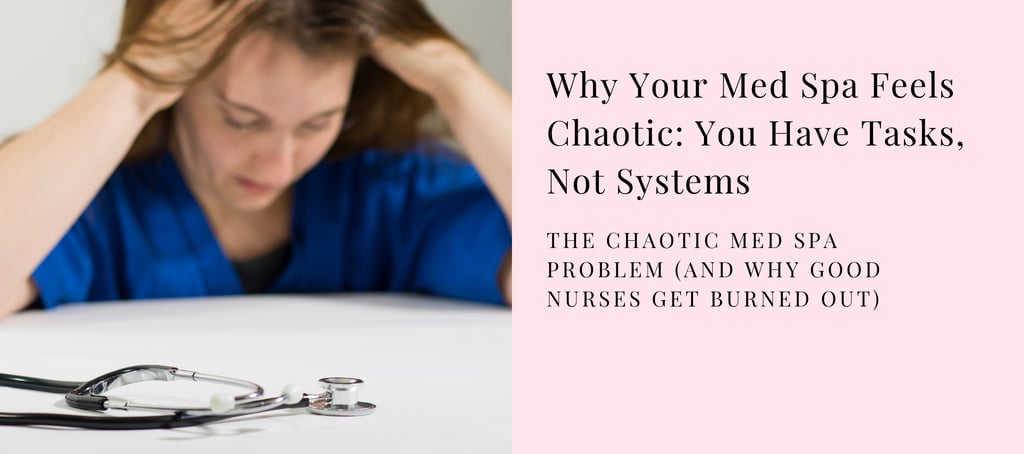
Why Your Med Spa Feels Chaotic: You Have Tasks, Not Systems
The chaotic med spa problem (and why good nurses get burned out)
Aesthetics can look calm on Instagram—soft lighting, perfect results, cute branding.
But behind the scenes? Many med spas feel like:
constant reschedules and no-shows
missing consents
unclear “who follows up?”
last-minute supply panic
inconsistent charting
patients messaging staff personally
refunds handled emotionally instead of by policy
“we’ll figure it out later” becoming the business plan
If you’re an RN injector, this matters because chaos doesn’t just stress you out—it increases risk:
patient safety risk
compliance risk
documentation risk
reputation risk
and license risk
The fix is not “work harder.”
The fix is systems.
Tasks vs Systems (the difference that changes everything)
What a task is
A task is something you do once:
send a follow-up text
confirm an appointment
restock supplies
document a visit
respond to a complaint
post on Instagram
Tasks are necessary—but they are not reliable.
Because tasks depend on:
memory
motivation
someone being available
“hoping” it gets done
What a system is
A system is a repeatable workflow that happens consistently, even when the clinic is busy.
A system includes:
a trigger (when it starts)
steps (what happens)
a standard (what “done” looks like)
accountability (who owns it)
documentation (where it’s recorded)
Systems make success predictable.
Why this matters in healthcare environments (factual)
Healthcare and clinical work environments are deeply affected by workload, time pressure, and chaotic workflow.
Research has consistently linked high workload and time pressure to emotional exhaustion and stress—core components of burnout. (pmc.ncbi.nlm.nih.gov)
And documentation burden has also been associated with clinician burnout—especially when it’s inefficient, repetitive, or done after-hours. (pmc.ncbi.nlm.nih.gov)
Translation for med spas:
If your clinic has no systems, your team will “carry the clinic” with mental load. That mental load becomes burnout.
The 7 systems every med spa needs (especially for RN injectors)
These aren’t fancy. They’re the basics that prevent chaos.
System 1: The Booking & No-Show Protection System
If you don’t have a system for booking rules, you will have:
no-shows
late cancellations
gaps in the schedule
last-minute scrambling
A real booking system includes:
booking confirmation workflow
reminder timeline
deposit/cancellation policy workflow
reschedule policy workflow
waitlist workflow
Task version: “We remind people when we remember.”
System version: “Every appointment gets reminders at X/Y/Z with a defined policy.”
(Inside the RN to Injector Blueprint, you get the actual workflow map + templates so you don’t create this from scratch.)
System 2: The Consult Conversion System
If consults don’t convert, everything feels chaotic because you’ll constantly chase new leads.
A consult conversion system includes:
consistent consult structure
consistent plan presentation
consistent next-step close
consistent documentation prompts
Task version: “I just talk to them and see what they want.”
System version: “Goals → assessment → one-step plan → expectations → next step.”
(If you haven’t read it yet, this ties directly to your consult conversion blog.)
System 3: The Documentation & Consent System (license protection)
This is where most clinics are weak.
A documentation system includes:
a standard note format
required documentation elements
a consent workflow
a photo consent workflow
storage and access rules
Why it matters: informed consent and documentation failures show up repeatedly in negligence claims and patient complaint patterns. (mja.com.au)
Task version: “Chart it however you want.”
System version: “Here’s the standard note + consent flow.”
System 4: The Follow-Up & Patient Safety System
This prevents:
angry patients
panic texts
negative reviews
refunds
“we didn’t tell them what to expect”
Follow-up systems include:
aftercare instructions
red flag symptom education
check-in timeline
documentation of follow-up
escalation workflow
Task version: “We follow up if we think about it.”
System version: “Every client gets a Day 1 + Day 7 check-in, documented.”
System 5: The Adverse Event / Escalation System
Even if events are rare, your system must exist before you need it.
A good escalation system includes:
who to contact
how fast to respond
what to document
what language to use (and avoid)
where supplies are stored
what follow-up schedule is required
Evidence-based guidance exists for managing filler-related adverse events and emphasizes structured approaches and preparedness. (asds.net)
Task version: “We call someone if something happens.”
System version: “Here’s the escalation flow and roles.”
System 6: The Inventory & Product Handling System
This prevents:
running out of essentials
expired products
missing lot numbers
“gray market” risk
disorganized storage
Inventory systems include:
receiving and verification
storage requirements
expiration tracking
reorder thresholds
lot number documentation rules
Task version: “We order when we notice we’re low.”
System version: “Reorder thresholds + weekly audit.”
System 7: The Complaints / Refund / Review System
This is the one that saves staff from emotional firefighting.
Complaint systems include:
who responds
the response timeline
what gets documented
when to escalate to owner/medical director
refund policy standards
review request workflow (when appropriate)
Task version: “We handle it case by case.”
System version: “We follow the same process to stay consistent and protected.”
Case studies (fictional, but based on common patterns)
Case Study #1: “The chaos clinic”
An RN injector joins a med spa that looks successful online.
But behind the scenes:
booking reminders are inconsistent
consents aren’t standardized
charting varies per injector
follow-up is “optional”
product ordering is last-minute
patients text staff personally
When a complaint hits, the clinic panics, overpromises, and doesn’t document the interaction well.
The RN feels anxious and trapped.
What caused the chaos?
Not volume. Not marketing.
No systems.
Case Study #2: “The calm clinic”
Another clinic isn’t “fancier”—but it’s calmer because:
every appointment has an automated reminder system
every consult follows a consistent structure
every visit has standardized documentation prompts
every patient gets aftercare + follow-up
every complaint is handled by policy, not emotion
Staff are less stressed. Patients trust the process. Reviews are stronger.
Why it works
Systems create safety and consistency.
The simplest way to turn tasks into systems (without adding work)
Use this 4-part template:
1) Trigger
What starts the workflow?
Example: “A consult is booked.”
2) Steps
What happens every time?
Example: “Send confirmation → send reminders → consent workflow → consult checklist.”
3) Standard
What does “done correctly” look like?
Example: “Consult note includes X elements.”
4) Owner
Who is responsible?
Example: “Front desk owns reminders. Injector owns note.”
When you do this, you stop relying on memory.
A quick “systems audit” checklist for RN injectors
If you’re an employee, this helps you see whether the clinic is structured safely.
✅ Booking rules and reminders are consistent
✅ Consult process is structured (not random)
✅ Documentation has a standard format
✅ Consent and photo rules are clear
✅ Follow-up is consistent and documented
✅ Escalation plan exists for urgent concerns
✅ Inventory system prevents shortages
✅ Complaints and refunds are handled by policy
✅ Training and competency expectations exist
✅ Someone owns each system
If you can’t check these off, you’re not failing—your clinic just needs structure.
Where Nurse Guided fits (and why the Blueprint exists)
Most nurses don’t need more motivation.
They need:
a done-for-you roadmap
templates
scripts
workflows
checklists
and “what comes next” clarity
That’s exactly what the RN to Injector Blueprint gives you—without you piecing it together from random posts.
✅ Start free: https://nurseguided.systeme.io/freebie
✅ Blueprint: https://www.nurseguided.com/blueprint
✅ Tools + calculators: https://www.nurseguided.com/med-spa-calculators
✅ Home: https://www.nurseguided.com
FAQ
What are med spa systems?
Med spa systems are repeatable workflows for booking, consults, documentation, follow-up, inventory, complaints, and escalation. They reduce chaos and improve consistency.
Why do med spas feel chaotic?
Because they run on tasks and memory instead of systems and SOPs. This increases workload and time pressure, which is linked to stress and burnout. (pmc.ncbi.nlm.nih.gov)
Do I need SOPs if I’m an employee injector?
Yes. SOPs clarify expectations and protect your license through consistent documentation, consent, and escalation processes.
References
Workload/time pressure and burnout relationship in nursing work environments. (pmc.ncbi.nlm.nih.gov)
Documentation burden associated with clinician burnout. (pmc.ncbi.nlm.nih.gov)
Informed consent disputes in negligence claims/patient complaints. (mja.com.au)
Evidence-based recommendations for filler adverse events and structured readiness. (asds.net)
Nurse Guided
Newsletter: Get weekly tips for nurses entering aesthetics.
rn@nurseguided.com
Empowering nurses with practical tools for aesthetic career growth and med spa startup planning.
Resources
Articles
Company
Legal
© 2026 NurseGuided. All rights reserved. | Created by Kimberly Thompson, RN
Educational content only. Not legal, medical, financial, or regulatory advice.